Marie

Admiring vs. Feeling: Reflections on Scottsdale Art Week Photography
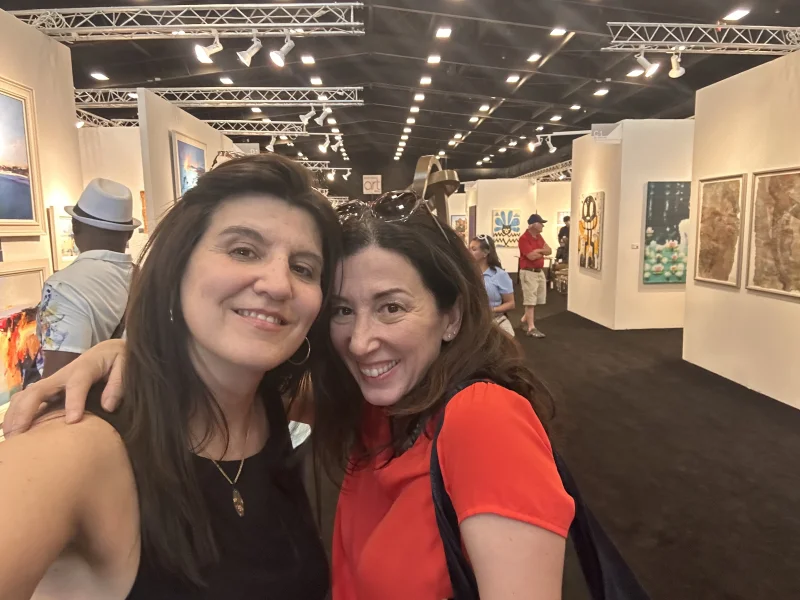
I walked into Scottsdale Art Week expecting to be impressed. I did not expect to be undone.
There is a particular kind of experience that only happens in the presence of original art: not reproductions, not screens, not prints in a book you've flipped through a hundred times. The real thing. The actual object. And this weekend, surrounded by decades of extraordinary photography, I was reminded of something I think we forget in our endlessly filtered, algorithmically curated visual world: there is a profound difference between admiring something and feeling something.
They are not the same. Not even close.
The Paintings That Left Me Cold
Let me start with an admission that might ruffle a few feathers.
Scottsdale Art Week was full of paintings. Extraordinary paintings, technically speaking. Photorealistic work so precise, so painstakingly rendered, that at a distance you genuinely could not tell them from photographs. The kind of paintings that make you think: how is that even possible with a brush? The kind that draw small crowds of people leaning in, squinting, marveling at the craft.
And I marveled too. I really did.
But they left me cold.
I've been turning that feeling over in my mind ever since, trying to understand it. It wasn't snobbery. It wasn't indifference to skill. It was something else, something about the nature of the experience itself. When I stood in front of those paintings, no matter how breathtaking the technique, I was always aware of a distance between me and the image. A layer of interpretation. I was seeing what the painter chose for me to see: their framing, their light, their emotional edit of reality. Beautiful, yes. Masterful, absolutely. But ultimately, it was their vision. Not my connection.
A photograph is [something else entirely](/news/editorial-portraits-art-vs-documentation/).
The Room You Can Step Into
With a photograph, I'm there.
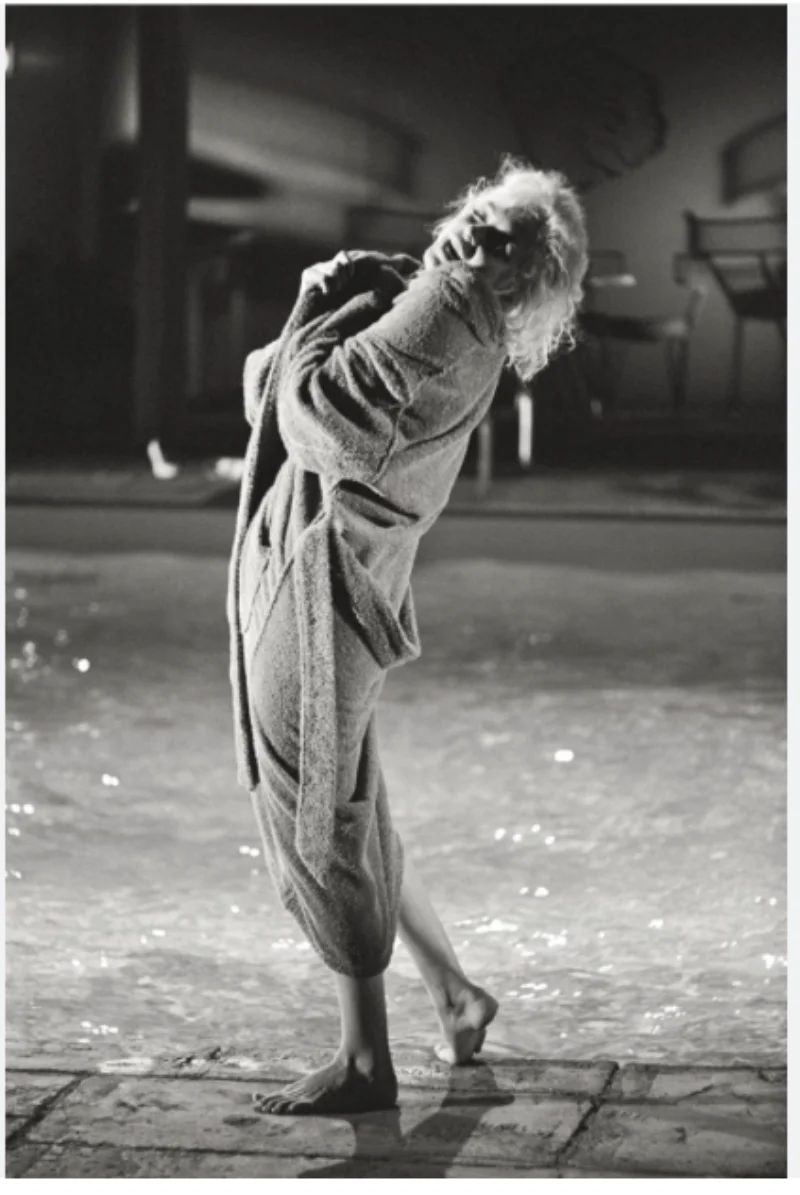
That's the only way I can describe it. In the room. Beside the subject. My eye meeting theirs across decades, across continents, across death itself sometimes. There is no mediator. No brushstroke standing between me and the moment. A photograph was reality: for one fraction of a second, light hit a surface and the world was recorded exactly as it was. Not interpreted. Not reimagined. [Captured](/news/image-ai-cant-make-human-creativity/).
No amount of technical mastery can replicate that. And standing in a room full of extraordinary photographs this weekend, I felt it over and over again: that sudden, almost physical sensation of connection. Of presence. Of being pulled through the frame and into the moment itself.
Funny, too, how every single photograph that stopped me in my tracks was in black and white. I don't think that's a coincidence. Strip away color, that most immediate, emotional, distracting of visual elements, and what you're left with is pure form, pure light, pure truth. Black and white photography doesn't seduce you. It just shows you.
Georgia O'Keeffe: Arms Crossed, Chin Up, Absolutely Unbothered
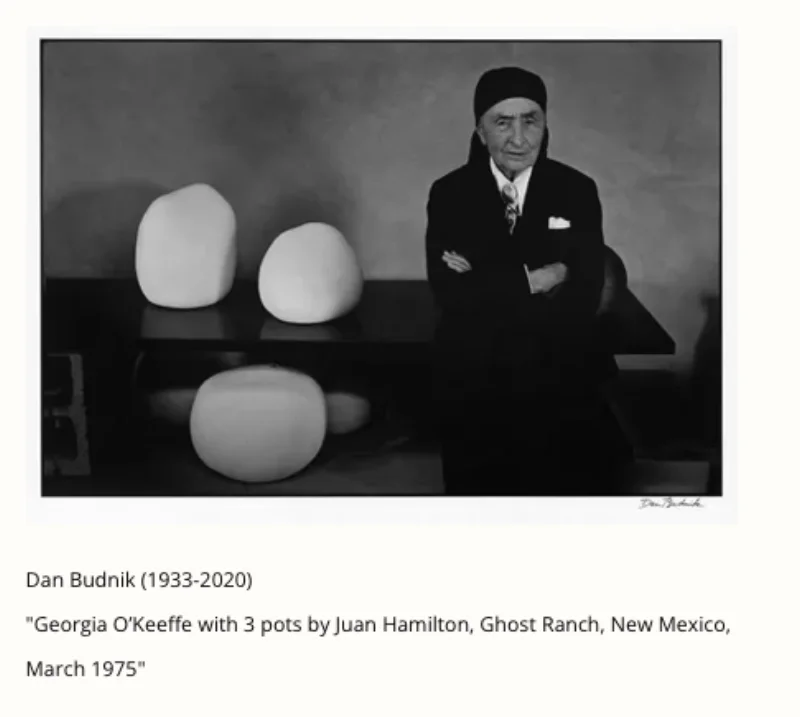
If I had to name one image from the entire weekend that I will carry with me for years, it might be Dan Budnik's portrait of Georgia O'Keeffe at Ghost Ranch, New Mexico, March 1975.
She was 87 years old.
Arms crossed. Chin up. Dressed in black. Standing beside three smooth, pale ceramic pots by her companion Juan Hamilton: organic, sculptural forms that seem to echo her own presence in the frame. The light is even, almost severe. There is no flattery here, no softening of age, no attempt to make her look anything other than exactly what she was: one of the most formidable artists America has ever produced, fully inhabiting the final chapter of a long and uncompromising life.
That's not just a portrait. That's a statement.
What strikes me most is the relationship between O'Keeffe and those pots. They sit beside her like silent companions, witnesses to a life lived entirely on her own terms in the high desert. And there is something deeply right about the way their sculptural sensibility mirrors hers. She spent decades finding the essential form of things: bones, flowers, hills, sky. Here, in this quiet setting, the objects around her do the same. Everything unnecessary has been stripped away. What remains is pure presence.
Dan Budnik photographed some of the defining figures and movements of the 20th century: the Civil Rights movement, the art world, the American West. But there is something in this portrait that feels like a culmination. Two artists, one frame, and a light that tells you everything you need to know.
Bruce Springsteen: Before the Legend
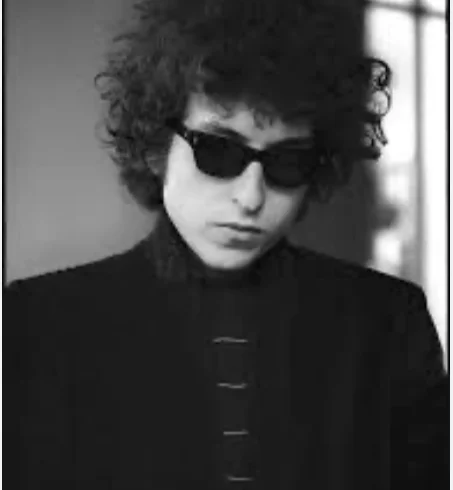
David Michael Kennedy's Bruce in Kitchen is a masterclass in what photography does better than any other art form.
There is no stage. No spotlight. No leather jacket, no fist pump, no ocean of screaming fans. Just a young man sitting at a kitchen table, arms resting on the formica, looking directly into the lens with an expression that is open, unguarded, almost shy. A window behind him does all the work light needs to do, falling soft and even across his face, casting the room in that particular grey-white glow that makes black and white photography feel like memory.
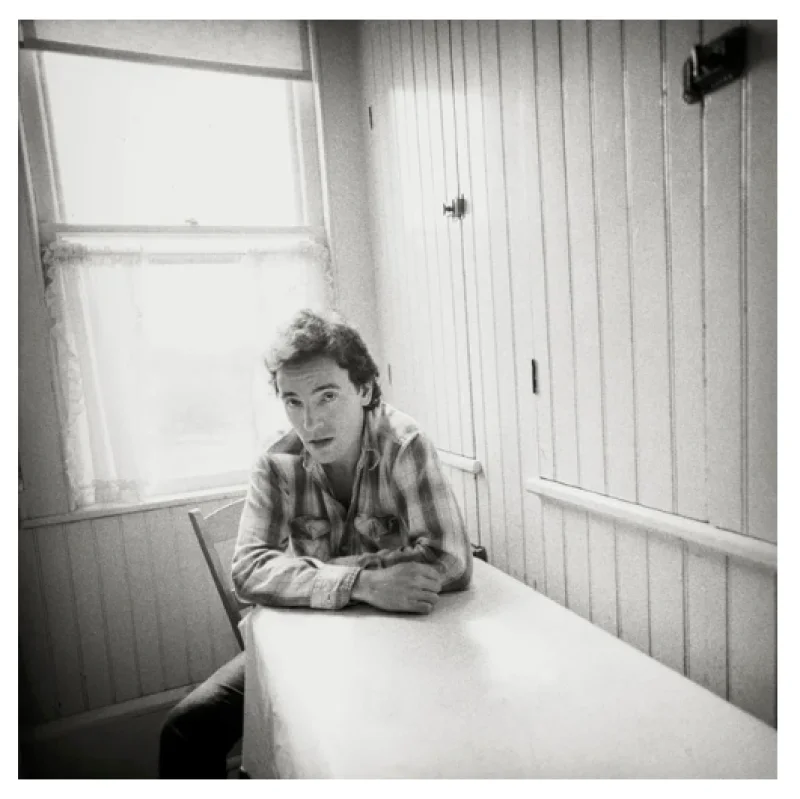
This was Bruce Springsteen before Born to Run. Before the mythology. Before the decades of sold-out stadiums and the weight of being the Boss. And Kennedy caught something in that kitchen that no amount of later iconography could manufacture: the quiet, concentrated intensity of someone who already knows, somewhere deep inside, exactly who they are, even if the world doesn't yet.
The intimacy is almost uncomfortable. You feel like you've walked in on a private moment. And that is precisely the point. That is what a photograph can do that no painting, however masterful, can replicate. Kennedy didn't paint that light. He didn't choose it from a palette or mix it to his preferred warmth. He found it: in a real kitchen, on a real afternoon, and recognized it for what it was.
Rodrigo Moya: Life as It Walks By
If Dan Budnik and David Michael Kennedy gave me intimacy, Rodrigo Moya gave me the world.
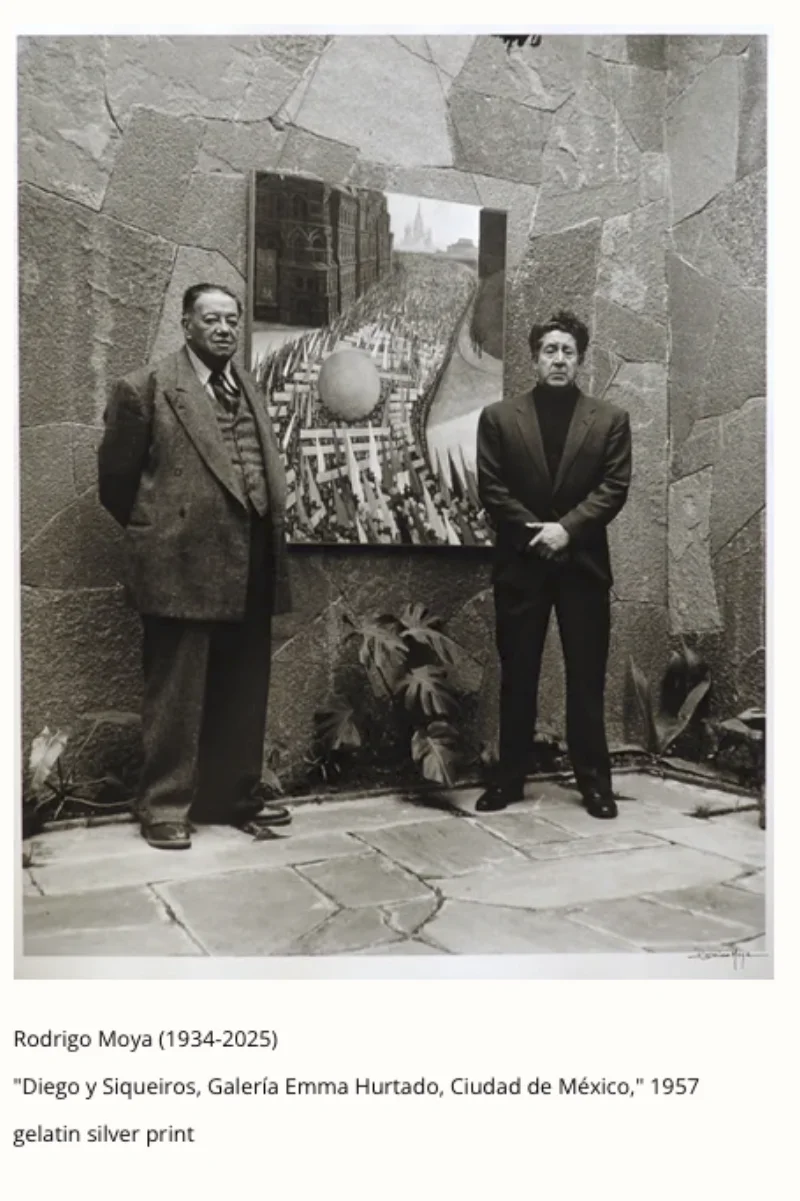
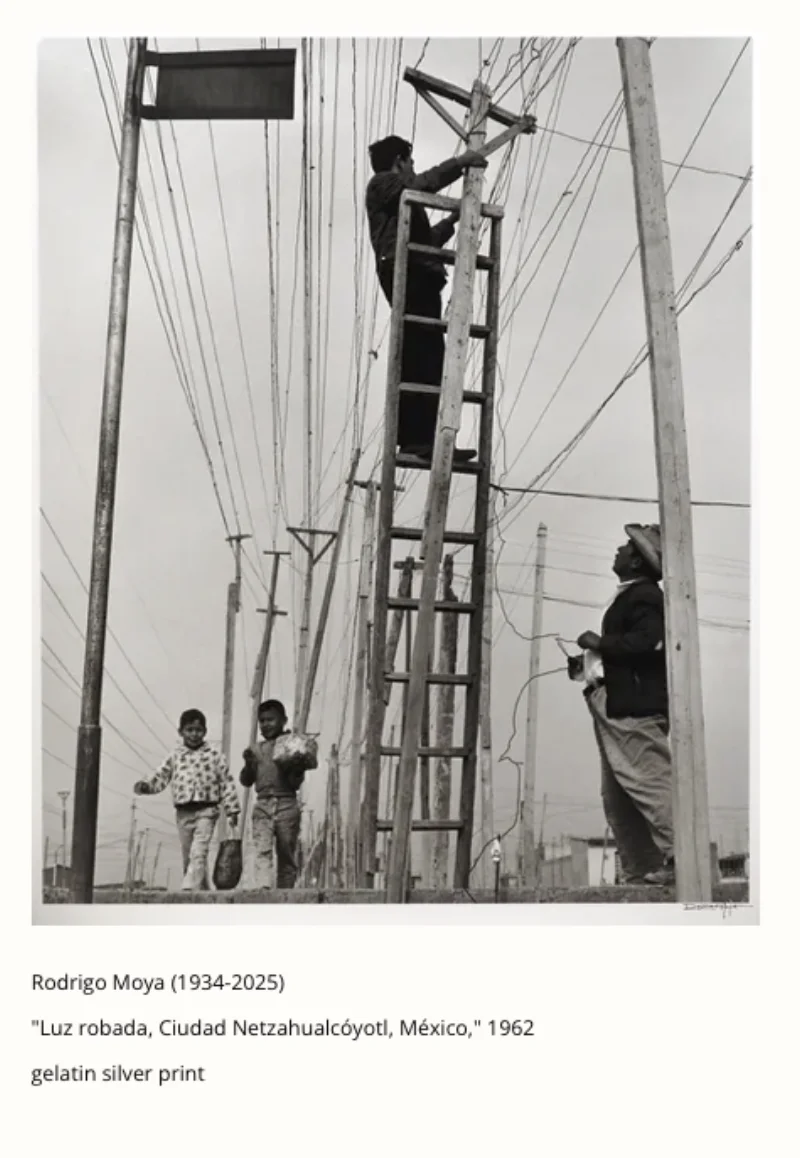
Moya, the Mexican photographer who lived from 1934 to 2025, spent decades documenting life in Mexico with a clarity and humanity that puts him in the company of the [great social documentary photographers](/news/vivian-maier-photographed-my-family/) of the 20th century. And the three gelatin silver prints on view this weekend were, each in their own way, extraordinary.
Diego y Siqueiros, taken in 1957 at Galería Emma Hurtado in Mexico City, shows Diego Rivera and David Alfaro Siqueiros standing before a painting. Two giants of Mexican muralism, side by side. There is weight in this image. History. The particular gravity of men who have lived through enough to fill several lifetimes.
Then there is Luz robada, "Stolen Light," taken in Ciudad Netzahualcóyotl in 1962. A man on a ladder, working the power lines above a dusty street while children walk past below, barely glancing up. The tangle of wires against the open sky is almost abstract. Life just walks by. That is the whole story, and Moya knew it.
And finally, La pesca milagrosa, "The Miraculous Catch," 1971. A small boy, beaming, holding a fish nearly as big as his torso. The joy on his face is so complete, so unself-conscious, that it reaches through the decades and lands directly in your chest. Behind him, other children watch. The world is large and full of possibility. He caught a fish. He is the happiest person alive.
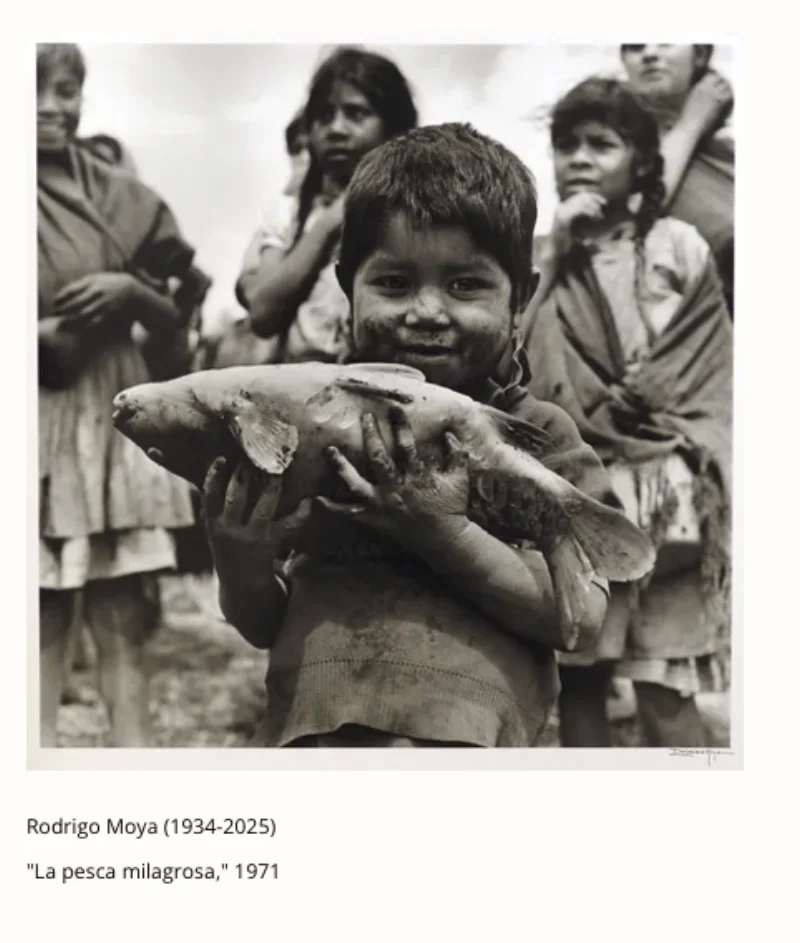
These are not pretty pictures. They are [true ones](/news/why-these-photos-are-perfect/). And the difference matters enormously.
Why Black and White, Every Time
I keep coming back to this question: why, out of everything I saw this weekend, did every image that moved me happen to be in black and white?
Part of it, I think, is about reduction. Color is immediate, emotional, distracting in the best possible way. It is the first thing we register, the thing that tells us whether something is warm or cold, inviting or threatening, alive or dead. Strip it away and something shifts. The eye slows down. You start looking at form, at light, at expression, at the actual content of the image rather than its surface.
But I think there's something else too. Black and white photography has a relationship with time that color photography simply doesn't. It looks like memory. It looks like the past in a way that feels true to how we actually experience the past: not in vivid Technicolor, but in shapes and shadows and the particular quality of light in a room we'll never stand in again.
Georgia O'Keeffe at 87, unbothered. Bruce Springsteen at a kitchen table, unknown. A boy with a fish. Workers on a ladder. Life, walking by.
These images are all fifty years old or more. And standing in front of them this weekend, they felt completely, undeniably present.
That's the miracle of photography. That's what no brushstroke can fake.
What's a work of art that stopped you recently, and why do you think it did? [I'd love to know](/contact/).
You May Also Like
News
What Pantone's Choice of White Tells Us About Color (And Maybe About Us)
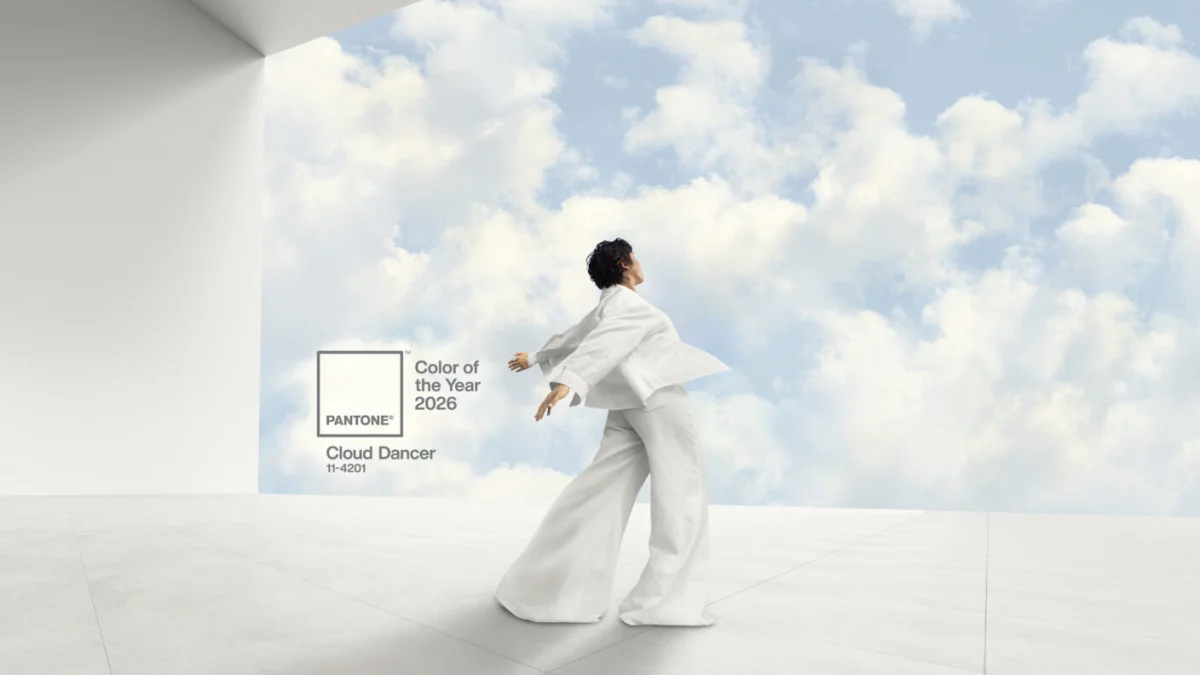
For the first time in 25 years, Pantone chose white as their Color of the Year. Cloud Dancer, they're calling it. The internet lost its mind. But before we debate what they're saying with this choice, let's talk about who Pantone actually is—and why their opinion on color matters at all.
Studio Life
When Your Headshot Becomes an Author Photo
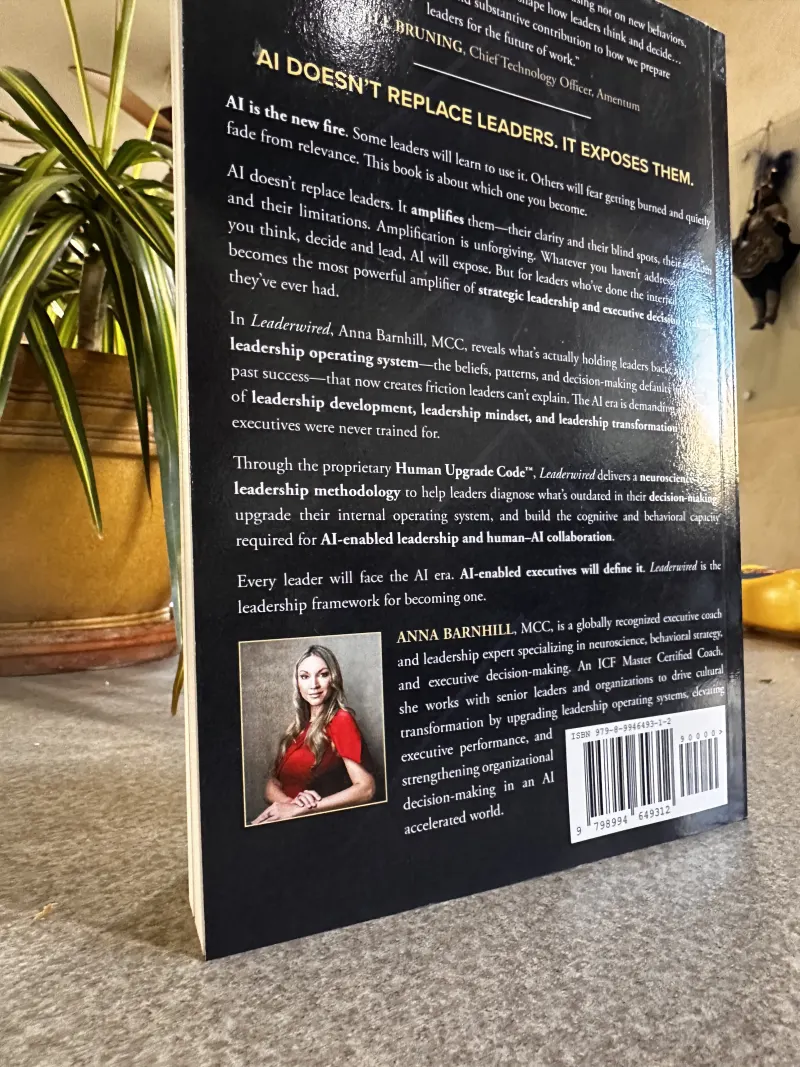
Three clients, three books, three headshots from this studio. What happens when the photo you created together ends up on a book cover.
Studio Life
The Best Team Photo I've Ever Taken Was Almost an Accident
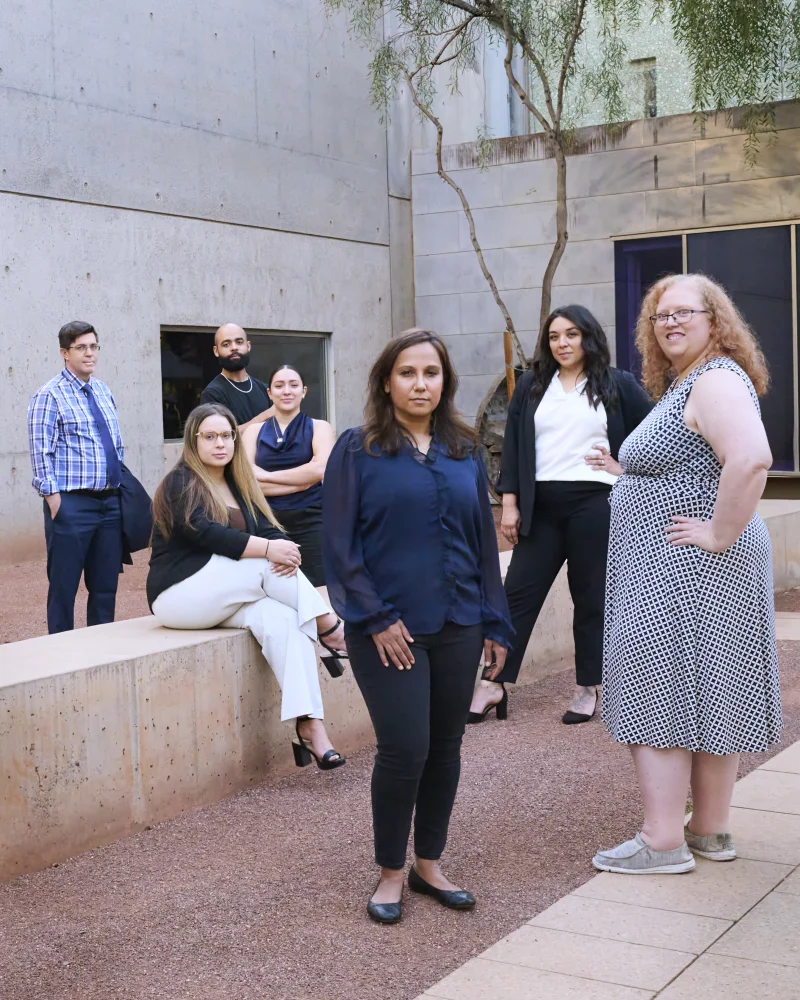
How an unplanned moment during a law firm team session at the Phoenix Art Museum became the strongest group photo of the evening — and why the best corporate team photos aren't fully posed.
