Marie

The Best Team Photo I've Ever Taken Was Almost an Accident
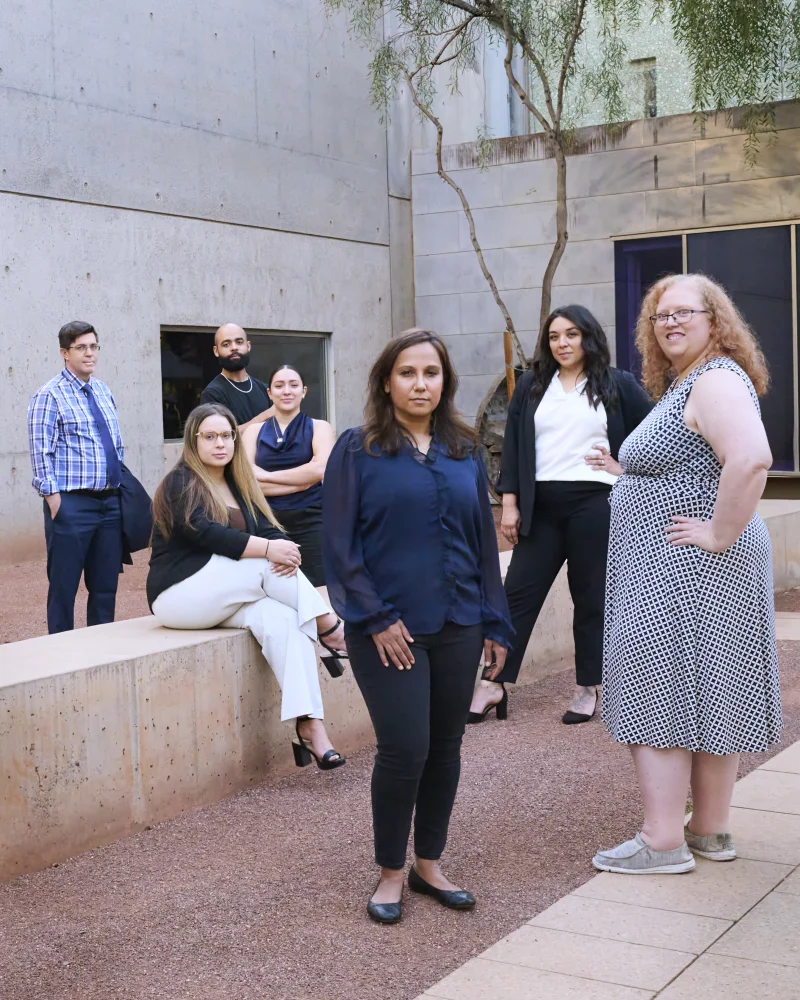
I photographed The Kedia Law Firm in Phoenix recently, and I walked away with my favorite team photo to date.
It wasn't planned. Not really.
The Session
The evening started like most on-location team sessions do. I photographed each team member individually for their office headshots, then moved into smaller group combinations. At some point, I pulled Pooja Kedia a little away from the group to photograph her on her own.
And that's when it happened.
As Pooja was walking back to her team, I saw the shot. The way her team had naturally settled into position behind her, the depth between them, the concrete courtyard framing everything. It was almost there. Almost perfect.
I asked Pooja to turn toward me. I moved two people. That's it.
Two people.
And the result became the strongest image of the entire evening.
Why the Best Group Photos Aren't Fully Posed
Here's what most people imagine when they think of a corporate team photo: everyone lined up in a row, stiff shoulders, forced smiles. The kind of image that ends up buried on a website's "About" page and never gets a second look.
I get it. Team photos have a reputation for being boring. But that's not a team photo problem. That's a direction problem.
What made this Kedia Law image work is that the foundation was organic. The team had already found their natural spots, the way people do when they're comfortable around each other. One person sitting on a ledge, others standing at slightly different depths. Nobody shoulder to shoulder. Nobody matching.
My job wasn't to build the photo from scratch. My job was to see what was already forming and make two small adjustments that pulled the composition together.
That's the difference between directing a group and over-directing them.
What I Actually Saw
Let me break down what caught my eye in that moment.
Pooja was already the natural focal point. She was closest to me, slightly separated from the group, and when she turned to face my camera, her position created a clear visual anchor. Your eye goes to her first, then travels to the team behind her.
The depth was the other thing. Her team wasn't on a single plane. They were staggered at different distances from the camera, some slightly overlapping, one person seated. That layering is what gives a group photo dimension instead of flatness. It tells you these people exist in a real space, not a photo lineup.
The concrete courtyard at the Phoenix Art Museum helped, too. The texture and the muted desert tones let the people be the focus without competing with the background.
All of those elements were already there. I just had to recognize them and make two small moves to lock it in.
The Two-Person Rule
I think about this a lot in team photography. How many adjustments does a group shot actually need?
In my experience, less than you think.
When you over-direct a group, you kill the energy. You turn seven people into mannequins. Everyone becomes hyper-aware of where their hands are, how they're standing, whether they're doing it "right." The tension shows up in the final image, even if you can't pinpoint exactly why.
But when you let people settle first and then refine? You keep the ease. You keep the relationships. You keep the body language that says "we actually work together" instead of "we were told to stand here."
Two adjustments is often all it takes. Move one person to fill a gap. Shift another to create a cleaner sight line. Done. The photo holds together because the foundation was real.
On-Location Changes Everything
This session happened in an outdoor courtyard, not my studio in Gilbert. And for team photography, that matters.
When I photograph a team at their office or at a location they've chosen, people are more relaxed. They're on familiar ground. They joke with each other between shots. They lean against walls and sit on ledges because that's what feels natural, and those instincts often produce better compositions than anything I could choreograph.
A studio gives me control over light. A location gives me context. For group portraits and office photography, context usually wins.
That doesn't mean location shoots are easier. I'm managing ambient light, foot traffic, backgrounds that change depending on the angle. But the tradeoff is worth it. You get images that feel like the team, not just images of the team.
What This Means If You're Booking Team Photos
If you're a business owner thinking about team photography in Phoenix, here's what I want you to know: the goal isn't perfection. The goal is a photo that actually represents your team.
That means giving your photographer room to observe before directing. It means choosing a location that means something to your company (or at least one with good light and interesting architecture). And it means trusting that a slightly imperfect arrangement, where one person is sitting and another is leaning and nobody is doing the exact same thing, is going to look better than a symmetrical lineup.
The Kedia Law photo works because it looks like a team that trusts each other. Pooja is front and center because she's the founder, and her team is behind her because that's where they actually stand. The composition mirrors the reality.
That's not something you can fake with posing. You can only see it and capture it.
The Shot You Almost Miss
I've been thinking about this image a lot since that evening. How close I came to missing it.
If I hadn't looked up at the right moment as Pooja was walking back, I would have moved straight into the next planned setup. I would have arranged them carefully, taken solid photos, and delivered a perfectly professional gallery.
But I wouldn't have gotten this.
Photography is full of those moments. The ones that happen in between the planned shots. The transition from one setup to the next, the unguarded second when someone isn't performing for the camera yet. Those are the moments that feel the most honest.
As a headshot and portrait photographer in Phoenix, I spend a lot of time thinking about what makes a photo connect with people who look at it. It's not technical perfection. It's not the most expensive lighting or the most elaborate setup.
It's presence. Being there, watching, ready.
Two people moved. One direction given. And the best team photo I've ever taken.
---
Looking for team photography in Phoenix? Get in touch to discuss your next session, see how team sessions work, or prepare your team for photo day.
You May Also Like

Tips & Guides
What Kind of Photos Do You Actually Need for a Personal Brand Shoot?
More than a headshot, less than a stock library. Here is the real mix of images a personal brand shoot should give you: working shots, different looks, props, and a signature color that ties the whole set together.
Studio Life
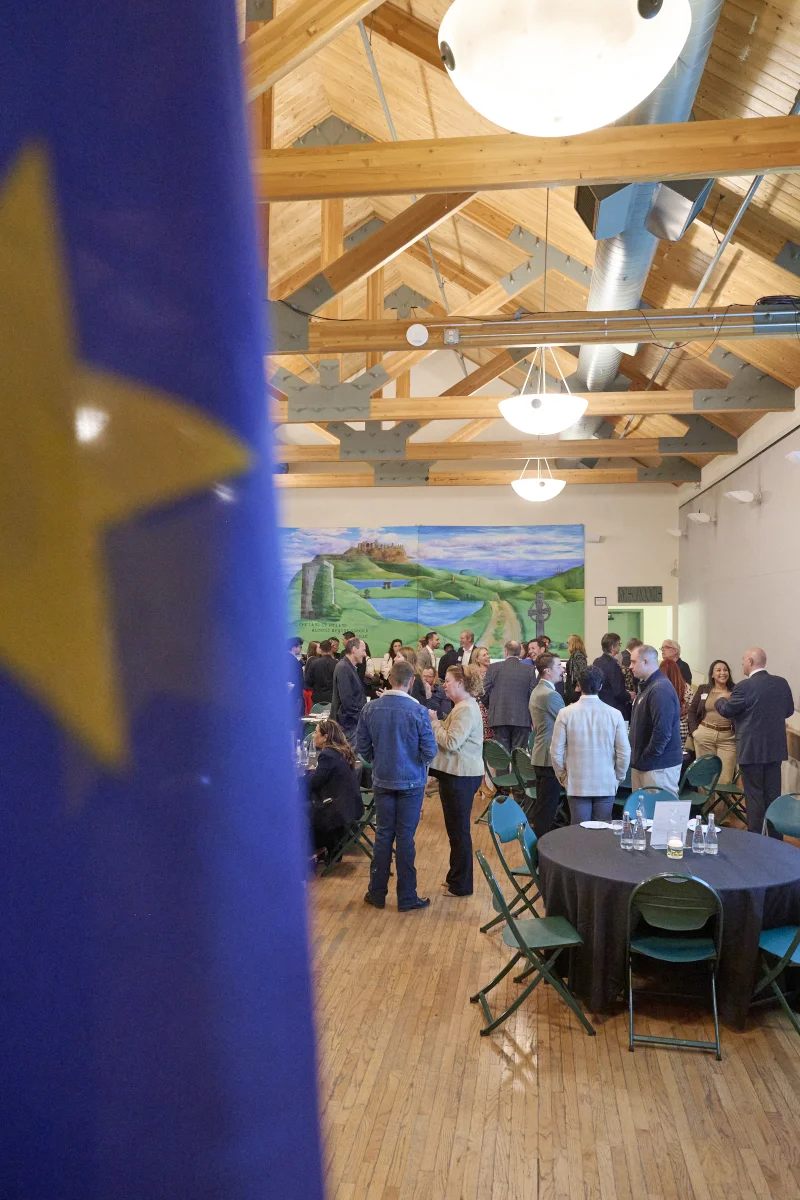
Event Photographer Phoenix: Behind the Lens at the Arizona-European Young Entrepreneur Award
Behind the scenes at the inaugural Arizona-European Young Entrepreneur Award in Phoenix. What it takes to photograph a high-stakes business awards ceremony.
Tips & Guides
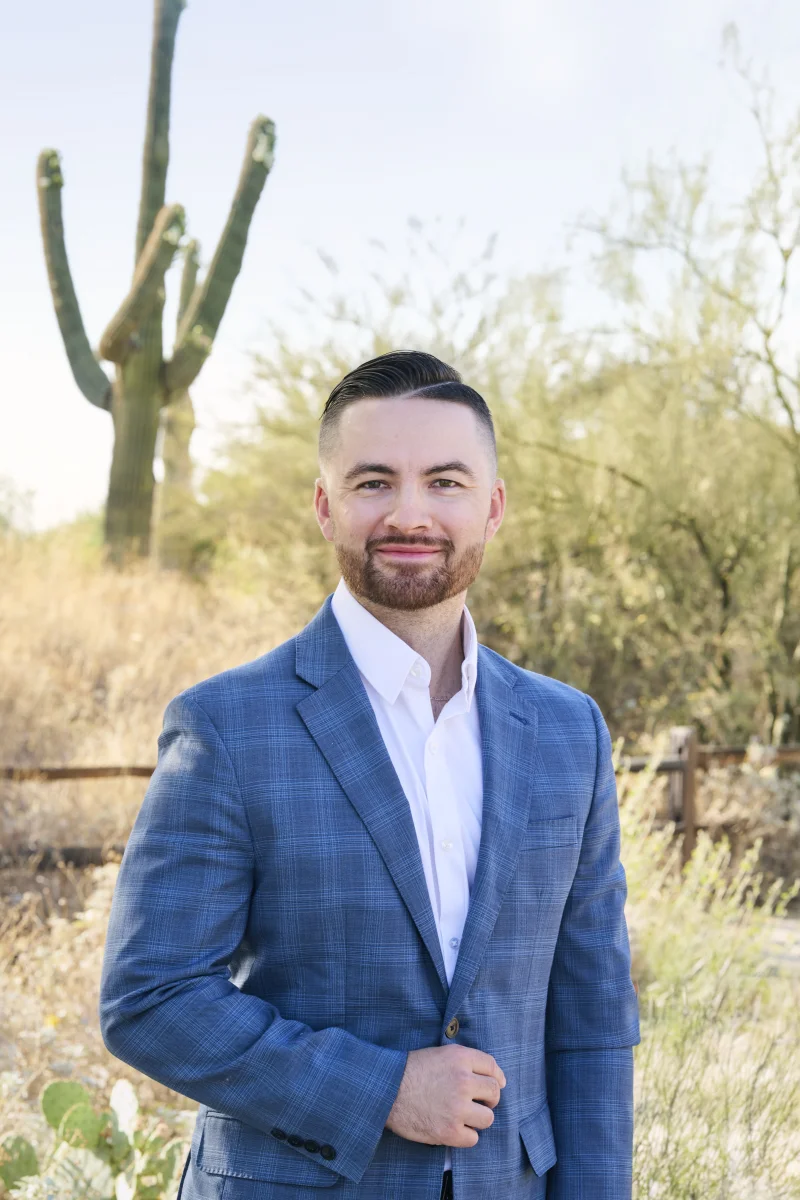
Best Locations for Outdoor Headshots in Phoenix, Arizona
The best outdoor headshot locations in Phoenix and the East Valley — from Papago Park to Desert Botanical Garden. What to consider before booking an outdoor session, and why most Phoenix professionals choose a studio instead.
