Marie

The Image AI Can't Make (And What That Taught Me About Human Creativity)
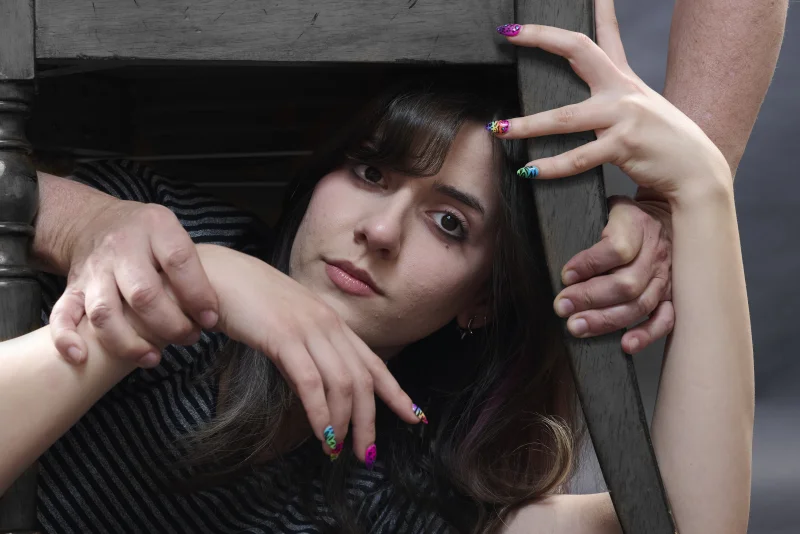
I got a creative challenge: make an image that AI can't create.
My first thought was technical. What does AI struggle with? Fingers. Chair legs. Objects weaving over and under each other. Spatial relationships that don't make immediate sense.
Okay. I'll use all of that.
The Plan (Sort Of)
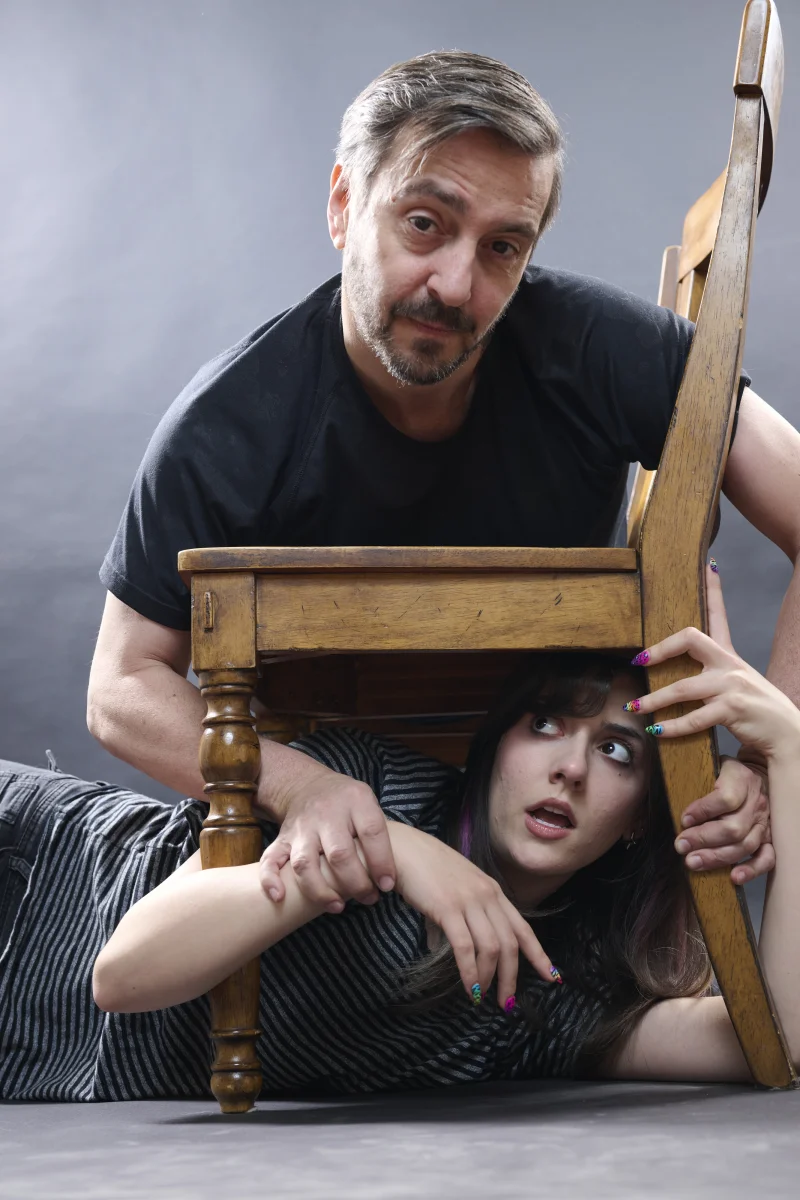
I knew I wanted arms weaving through a chair. Over, under, creating something visually confusing. An image that takes a moment to read - where your brain has to work to understand what you're looking at.
But here's the thing: I didn't have a clear picture in my head. I kept procrastinating because I was overthinking it. Trying to visualize exactly how it should look, where everyone should be positioned, how the arms should weave.
Finally, I decided: if I don't shoot this today, I'll never do it.
So I called my daughter Mai and my husband Vincent, and we figured it out in about an hour.
What AI Can't Do (The Technical Stuff)
AI image generators have gotten incredibly good. Scary good, honestly. But they still struggle with specific things:
Fingers. AI-generated hands often have too many fingers, fingers in weird positions, fingers that don't quite connect to hands properly.
Chair legs. Or any furniture with multiple legs, really. Getting the perspective right, the way legs connect to the frame, the spatial logic of it - AI frequently messes this up.
Spatial complexity. Arms going over and under objects. Things weaving through other things. Relationships that require understanding three-dimensional space.
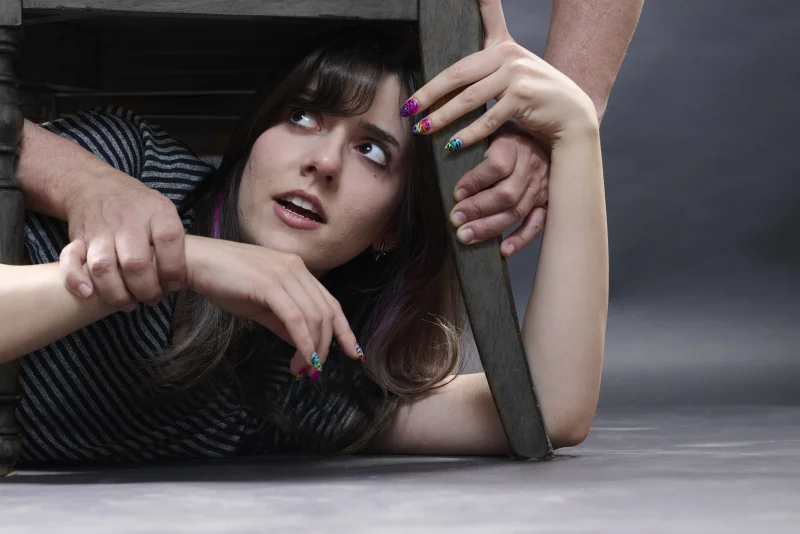
So I built my image around those weaknesses. Arms weaving through chair legs. Fingers clearly visible - and as it turned out, my daughter had just painted her nails with tiny detailed designs. That was pure luck, but it's perfect. AI would have a hard time replicating those specific, intricate nail art details.
What I Discovered (The Human Stuff)
But here's what I didn't expect to learn from this challenge:
The technical weaknesses of AI weren't the most interesting part.
The weird human expressions were.
Look at the faces in this image. Mai's expression - surprised, a bit theatrical, slightly absurd. Vincent's face - serious but with something slightly off about it. Neither of them is smiling naturally or looking "normal."
These expressions don't make complete sense. They're a little strange. A little outside the mainstream of what we typically see in photographs.
And that's the point.
AI learns from what we create. It's trained on millions of human-made images - mostly conventional portraits, stock photos, the kinds of images that get shared and uploaded the most. Smiles. Standard poses. Expressions that read as "normal."
But weird? Unusual? Expressions that don't quite fit a category? Human moments that are genuine but don't look like anything you'd find in a stock photo library?
AI would struggle with that too.
Not because of technical limitations, but because those moments are outside the data set. They're the unexpected, the strange, the human choices that don't follow patterns.
The Real Lesson
I went into this challenge thinking I'd target technical weaknesses - fingers, chair legs, spatial complexity.
I ended up discovering something more interesting: what makes human photography irreplaceable isn't just technical skill. It's the willingness to create something unusual.
Something that doesn't quite make sense at first glance.
Something that sits outside the mainstream patterns AI is trained on.
Something that comes from creative impulse, not data optimization.
AI is getting better at replicating conventional images. But the weird stuff? The unexpected choices? The moments that make you stop and think "wait, what?"
That's still ours.
Why This Matters
As AI gets better at generating images, the question becomes: what's left for human photographers?
The answer isn't just technical mastery. It's creative risk-taking. Making images that don't look like everything else. Choosing the expression that's slightly off, the composition that's a bit confusing, the moment that doesn't fit a category.
That's what I learned from this challenge.
I set out to exploit AI's technical weaknesses. I ended up exploring what it means to make something genuinely unusual - something outside the patterns, outside the data, outside what algorithms expect.
That's where human creativity still wins.
The way I keep that muscle alive is by giving myself constraints. A few weeks ago, two photographer friends and I tried a 90-minute color challenge in downtown Scottsdale — each of us could only photograph one color. The point wasn't to make beautiful images. It was to remember how to look at the world when nothing is doing the looking for you.
You May Also Like
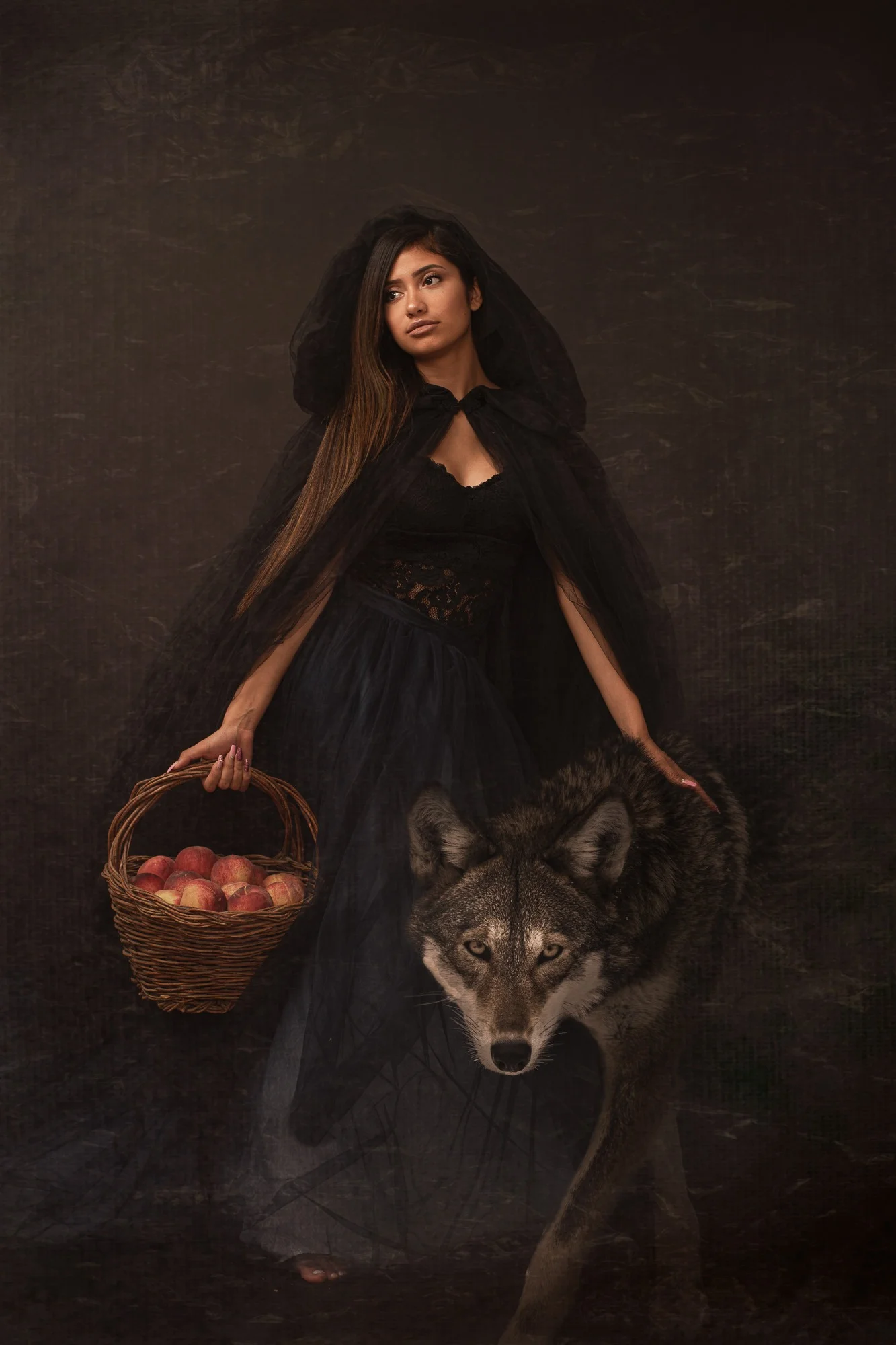
Earlier Conceptual Work
A collection of conceptual portraits exploring storytelling, emotion, and creative collaboration in the studio.
Understanding Copyrights of a Profile Picture
Paid for your headshot but wondering who owns it? Learn how copyright works, what your license includes, and why uploading to AI tools might cross a line.
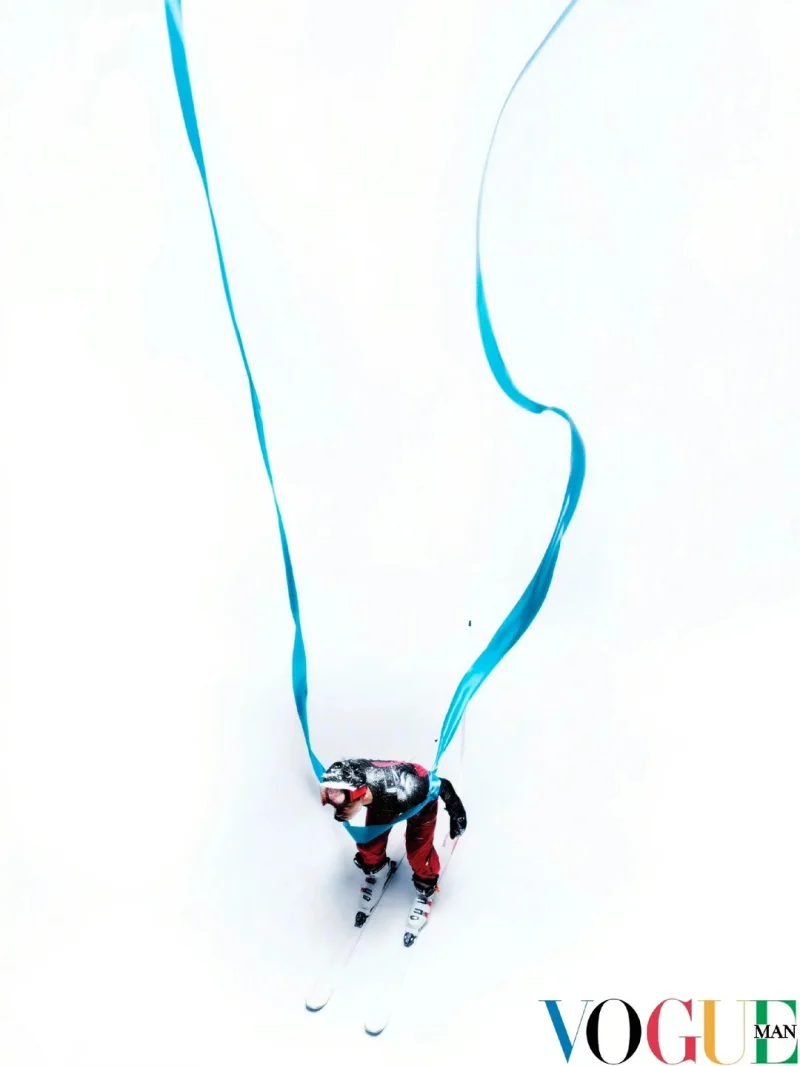
What Win Tam's Olympic Photos Teach Us About Movement in Portraits
Team China just unveiled their 2026 Winter Olympics uniforms, and Win Tam's editorial for Vogue China is a masterclass in using movement to reveal character. Here's what portrait photographers can learn from it.
